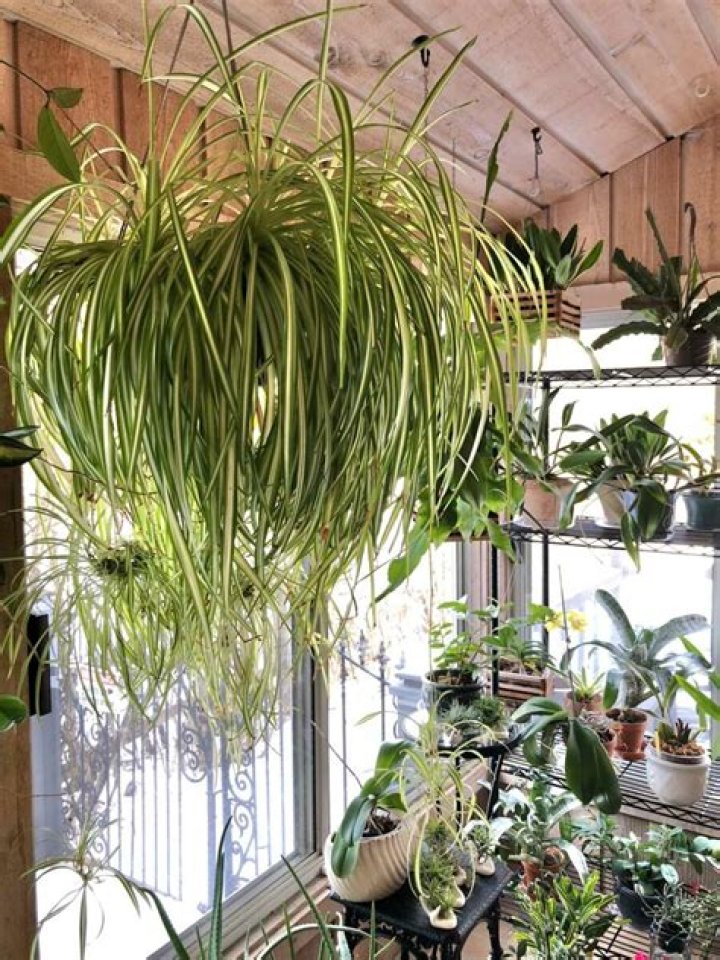
Besides, what should healthy orchid leaves look like?
Look at the leaves. In general, however, you should look for leaves that are thick, lightly colored, and hard. The leaves should be slightly yellow-green, almost like a green apple. Leaves that are too glossy green mean the plant has likely been overfed, and it will not bloom as well.
Additionally, how do you keep orchid leaves healthy? Here are six tips to help you keep your orchids alive.
- Make Sure It's Getting The Right Kind Of Light. Advertisement.
- Water Them Right. The way you water an orchid is a pretty crucial part of orchid care.
- Keep Them In A Warmer Room. Advertisement.
- Cut Blooms That Have Died.
- Feed Your Plants.
- Don't Pot Them In Soil.
Consequently, what orchid leaves tell you?
Orchids should have bright green, healthy leaves. Dark green leaves indicate that a plant is getting insufficient light, and yellowish-green or red leaves indicate that a plant is getting too much light. If you suspect a plant is exposed to too much light, feel the leaves.
What does an overwatered orchid look like?
Overwatering an orchid plant is extremely dangerous to the plant's health. Too much water stops oxygen from reaching the roots. Orchid roots exposed to excessive water begin to rot, turning brown to black, and become extremely soft. Examine the orchid's roots, looking for brown, mushy, rotting portions.
What is wrong with my orchid leaves?
The leaves of my orchid are turning to mush and the roots look like they are rotting. Due to the high humidity levels that orchids need to survive, they are at a higher risk for fungal and bacterial diseases. This can lead to conditions like root rot and spots on flowers and leaves.Why are my orchid leaves wrinkled?
The most common causes of wrinkled orchid leaves are lack of water, too much water, orchid diseases and low humidity levels. A good assessment of the growing conditions of the orchid should be able to identify the cause and help you to fix the problem.Can I grow an orchid from a leaf?
While lots of plants can grow new roots from broken leaves, Cats don't (to my knowledge). Certain shoots of certain orchids will (like Vandas and some Epidendroms, but not Cats.) Many plants are propigated from leaf cuttings. Unfortunately, orchids aren't.How many leaves should an orchid have?
Growing in very dry air, phalaenopsis may refuse to hold more than two or three flaccid leaves; whereas healthy phalaenopsis have at least four or five firm leaves at any one time. Plants attempting to flower under such conditions have been known to drop their buds.How do I get my orchid to bloom again?
You can encourage your orchid to bloom again with just a little TLC. Phalaenopsis orchids rebloom on old spikes with a new stalk emerging from a triangular node along the stalk. To trigger reblooming, your orchid will need a little more attention than what you usually give it.How do I know if my orchid is dehydrated?
The signs of dehydration include the following:- Pleated leaves on orchids like miltonias.
- Excessively shriveled pseudobulbs (thickened, swollen stems) of some orchids, like cattleyas.
- Droopy, soft, and puckered leaves on cattleyas.
- Yellow and wilted bottom leaves on phalaenopsis.
How do you know if an orchid is healthy?
Signs of Healthy Orchids- Orchid leaves are thick and rubbery.
- Leaves are uniformly green, and not mottled.
- Colors in the blooms are robust.
- Aerial roots are white and have green shiny tips. Longer green tips indicate better health.
- Potting mix is barely moist, and not bone dry or soaking wet.
How do you fix limp orchid leaves?
If you notice your orchid's leaves are withered and droopy, this could mean your plant is not getting enough water or humidity. Remember, an orchid's natural habitat is a humid climate, so your plant needs moisture. We recommend watering your orchid with three ice cubes once a week to avoid this problem.Do orchids need water everyday?
In general, water once a week during the winter and twice a week when the weather turns warm and dry. The size of your orchid container also helps determine how often you need to water, regardless of climate conditions. Typically, a 6-inch pot needs water every 7 days and a 4-inch pot needs water every 5 to 6 days.How do you revive wilted orchid leaves?
Water orchids potted in sphagnum moss every seven to 10 days. Orchids potted in shredded bark need water about once or twice a week. If your plant's leaf tips look burned and the roots appear withered, your water may be too salty. Rinse the potting medium with fresh, deionized water several times to clear out the salt.Should I remove wilted orchid leaves?
If a leaf is wilted, becomes yellow or is heavily blemished, it should be removed from the plant. This should be done with care.Do orchids need sunlight?
These plants thrive in strong light, but direct sunlight can burn orchids. Bright, indirect light from an eastern or southern window is ideal. Leaf color is a good indicator of the amount of light an orchid is getting: Bright green leaves indicate a happy, healthy plant.Do you water orchids from the top or bottom?
When you water, water thoroughly: The water should pour out from the bottom of the pot. Never let the pots of orchids sit in water for over a few hours: If the orchid pots have saucers, make sure to keep them free of water.How do you not kill an orchid?
How NOT to kill your Orchids: Simple Orchid Care- Don't over or under water. How you water is as important as how often.
- Use proper potting medium and pot. Orchid's roots need good air flow.
- Temperature and sun. Orchids like humidity and do best in brightly lit spots with indirect sunlight.
- Feed your Orchids. Orchids need food as much as they need water.